Raise the Bar Clinic
Our practitioners offer a range of services to support families and schools in the weeks and months following an assessment.
Our post assessment supports are designed to:
1. Increase understanding of a child’s or young person’s diagnosis and support needs from a neuroaffirming perspective.
2. Upskill parents and school staff.
3. Support young people’s self-esteem and self-advocacy skills.
4. Reduce overwhelm by providing emotional and practical guidance.
Research reveals that many families feel unsupported following assessment and burdened with the responsibility of seeking out information and advocating for their child on their own.
We have made it our mission to ensure that every client who receives an assessment with us has ongoing access to evidence based care, expert guidance, and practical support.
The Pathway
Guided by research and developed in consultation with families, we have created a range of post-assessment support options to help guide you as you embark on important next steps post assessment. Post assessment support services have been developed to provide you with:

A 50 minute child/young person feedback session which highlights a child’s strengths and skills, and gives hope and clarity about personalised strategies that help them to thrive.

A 50 minute parent session dedicated to equipping parents with essential knowledge to effectively navigate next steps with confidence.

A 50 minute school feedback session which provides assessment results and school specific recommendations to support student’s needs.
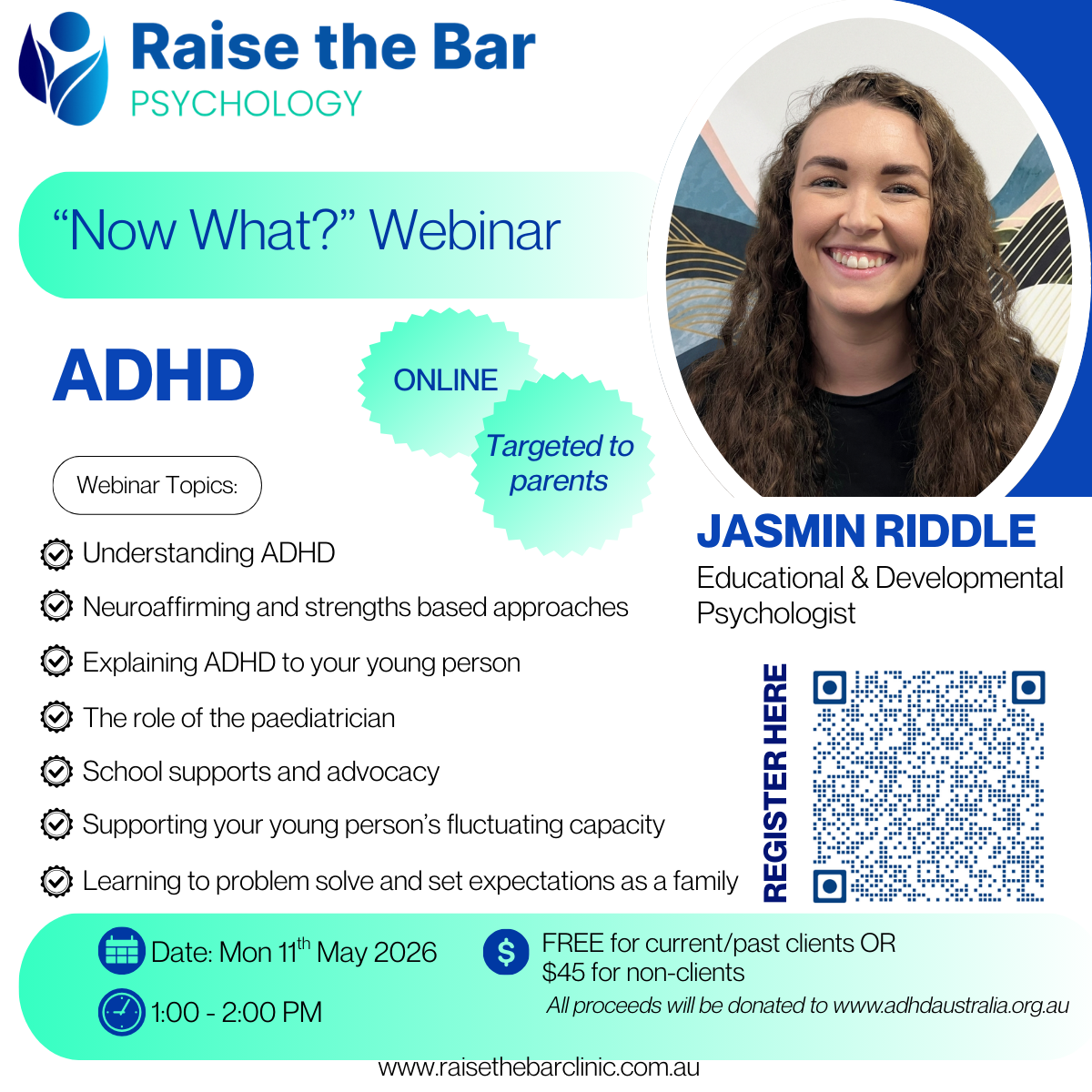
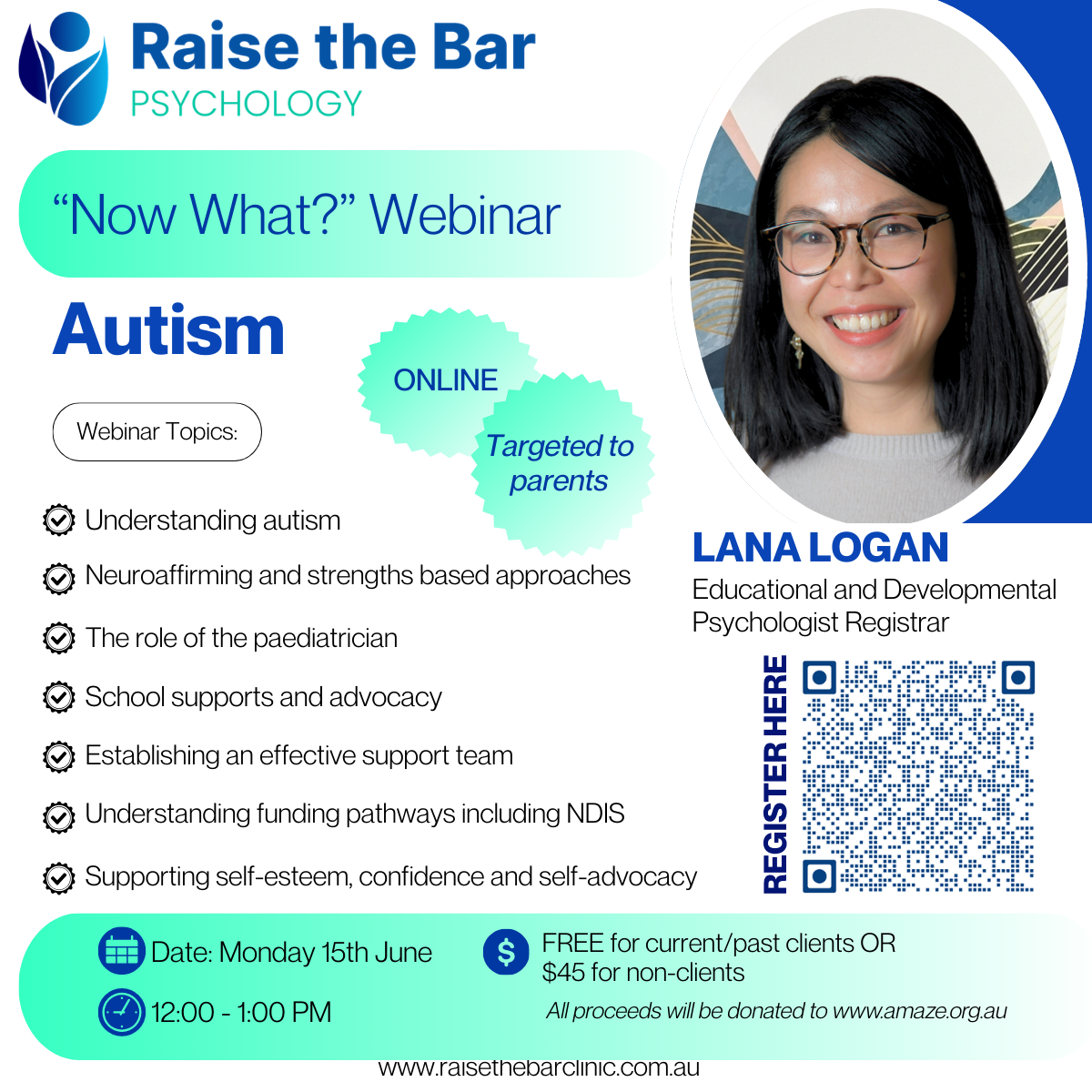
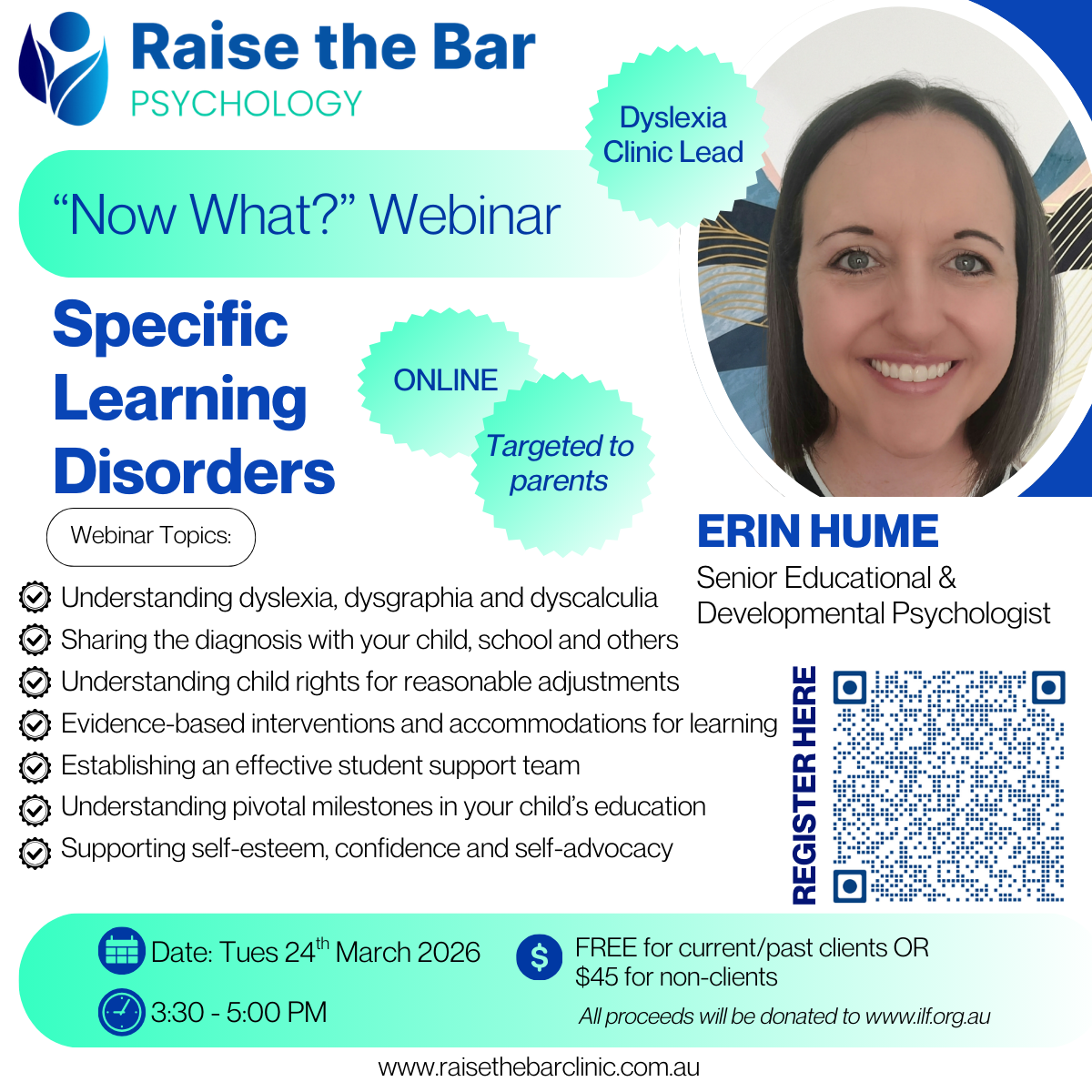
Raise the Bar Clinic’s “Now what” group information series offers clients and families an opportunity to receive key information about important next steps following their / their child’s diagnosis.
Single session consultations to address a specific concern or question such as adjusting to your child’s diagnosis, understanding your child’s neurotype, managing meltdowns, managing challenging behaviours, meeting sensory needs, supporting transitions, understanding and supporting inflexibility, energy accounting, and more.
Single session consultation to review and advise on personalised and neuroaffirming goals and strategies.
Single session consultations to address school based concerns or questions such as IEP strategies, understanding neuroaffirming approaches in education, managing challenging behaviours, meeting sensory needs, and more.
Completion of forms and letters including VCAA medical form, VCAA special provisions or support letter, SEAS supporting statement, letters for university special provisions, statement of support for school application on compassionate grounds, and more.
Collaborative creation of a concise, one-page summary designed specifically for school staff. Recommended to be updated annually.
Summary includes strengths, learning challenges, developmental differences, diagnoses (if any), and key support strategies and educational adjustments.
Raise the Bar Review Assessments provide an opportunity for clients to check in with their psychologist in the years following their comprehensive assessment, complete additional testing and receive updated information and recommendations. Review consultations include:
Inspired by director Dr Hayley Anthony’s research and vision, our post assessment supports are guided by the principles of:
Families remain at the heart of how we think about care and support in the post assessment period. We work collaboratively and in partnership with families to build knowledge, empower families, and instil hope and confidence to embark on those important first steps post diagnosis.
Our commitment to your family’s wellbeing is anchored in neuroaffirming and trauma-informed care. We recognise neurodivergence, such as Autism and ADHD, as a natural and valuable part of human diversity. Our neuroaffirming approach focuses on supporting your child’s authentic self, prioritising sensory safety and individualised communication over compliance or masking.
Our signature post assessment supports have been informed by: (1) key findings about post assessment support needs and (2) factors related to improved family functioning. Research indicates that parents feel unsupported post assessment and burdened by the responsibility to seek information and advocate for their child. The literature further suggests that parents who understand and accept their child’s diagnosis, who feel empowered and effective in supporting their child, are able to adjust expectations and reframe behaviours, and have a positive support network, are most likely to thrive.
A safe space for families to feel heard, validated and supported during the critical post-diagnosis time.
"Start where you are. Use what you have. Do what you can." — Arthur Ashe
You don’t have to do this alone. Book today.
Book Now
Our practitioners offer a range of services to support families and schools in the weeks and months following an assessment. Please let us know which post-assessment support you would like to book with your practitioner, and our friendly admin team will contact you shortly with some available appointment times.