
Completing a neurodevelopmental assessment is often the result of months, sometimes years, of noticing particular differences and challenges experienced by your child and wondering what it means. When the feedback session finally arrives, and a diagnosis is confirmed, the feelings that follow can be mixed. Relief. Validation. Uncertainty about what happens next. Many parents describe leaving that session with a detailed report in hand and no clear idea of what to do with it.
This is exactly where post-assessment support can make a real difference. The assessment answers a lot of questions, but the weeks and months that follow are often when families need the most guidance. Understanding the diagnosis, talking to the school, finding the right professionals, and deciding what to prioritise are tasks that can feel entirely overwhelming without someone to help navigate them.
Why the Post-Diagnosis Period Matters
Research has consistently found that how well families adjust in the weeks after diagnosis has a meaningful impact on long-term outcomes for the child. It is not just about accessing services quickly. Parents who feel they understand their child’s neurotype, who feel capable of advocating for them, and who have a clear sense of next steps tend to cope better and act more confidently on the recommendations made in an assessment report.
The problem is that most families are left to figure this out on their own. The psychologist hands over the report, explains the findings in the feedback session, and that is often where the formal support ends. But the questions usually start after that meeting. Questions the parent did not know to ask yet. Concerns that surface after reading the report. Uncertainty about what the school needs to know, or what a referral to a paediatrician actually involves.
Research reveals that many families feel unsupported following assessment and burdened with the responsibility of seeking out information and advocating for their child on their own. That gap between assessment and ongoing support is exactly what structured post-assessment care is designed to address.
What Parents Commonly Find Hard After a Diagnosis
There is no single experience of receiving a diagnosis for your child. Some parents feel enormous relief that there is finally a name for what they have been observing. Others feel sadness or worry about what the future holds. Many feel both at once.
What tends to unite most families is the sense that there is a lot to figure out, and quickly. Some of the most common challenges parents face include understanding how the diagnosis applies to their specific child (rather than the generic descriptions in a diagnostic manual), knowing how to talk about the diagnosis with the child and with extended family, learning what to realistically expect from schools in terms of adjustments and support plans, and knowing which recommendations to act on first when the report lists many different things.
For families who have received an ADHD assessment or an autism assessment, there is often an additional layer of uncertainty around medication, therapy approaches, and NDIS eligibility. Knowing who to contact, what questions to ask, and how to communicate effectively with school staff all takes knowledge and confidence that most parents are still building in those early weeks.
What Post-Assessment Support Looks Like at Raise the Bar
At Raise the Bar Clinic, the assessment is the beginning of the journey, not the end. Our post-assessment support services are specifically designed to address the gaps that most families encounter after receiving a diagnosis. Raise the Bar’s signature post assessment supports include the following three core services:
Strengths and Strategies Child Feedback
This 50-minute session focuses on the child directly. It is designed to be neuroaffirming and age-appropriate, helping the young person begin to understand their own brain and what helps them to learn and feel good about themselves. Framed around strengths rather than deficits, this session supports the child’s self-esteem at a time when they may be processing significant new information about who they are.
Next Steps Parent Intensive
This 50-minute parent session gives families the space to ask the questions they have been holding since the feedback appointment. Parents can work through the diagnosis in the context of their particular child, understand the specific recommendations in the report, and get practical guidance on navigating school conversations, referrals, and home strategies.
This is often where parents process aspects of the diagnosis they were not ready to sit with in the formal feedback. Understanding how to share the diagnosis with their child in language that is both honest and protective of their sense of self is one area regularly addressed during these sessions. Questions about what to expect over time, how to coordinate multiple supports, and how to talk to extended family are also common.
School Feedback Session
This structured 30- or 60-minute session walks key school personnel through the assessment findings, explains the functional impact of the diagnosis in a classroom context, and provides specific strategies and educational adjustments. A school feedback session is valuable because it is rarely enough for a school to simply be told a diagnosis. Teachers and learning support staff need to understand how the diagnosis presents for this particular student and what changes are likely to make a real difference day to day.
For families who need ongoing guidance beyond these initial sessions, Raise the Bar’s parenting support services offer individualised consultation, including help with school communications, IEP reviews, and strategies for home.
When These Sessions May Not Be Enough
Post-assessment support sessions are not therapy, and they are not a substitute for the ongoing specialist input some children need. For families dealing with complex mental health concerns, significant behavioural challenges, or children who need intensive therapeutic intervention, these sessions are a starting point rather than a complete solution.
That said, for many families, structured guidance in those first critical weeks can meaningfully reduce overwhelm and help parents move from feeling lost to feeling equipped. The goal is not to resolve everything at once, but to help families take clear, informed steps forward.
Post-assessment Support: Your Questions Answered
| Question | Answer |
|---|---|
| What is post-assessment support? | Post-assessment support refers to structured guidance and consultations available to families after a child receives a neurodevelopmental diagnosis. It includes sessions for the child, parents, and school staff to help everyone understand the diagnosis and implement report recommendations effectively. |
| Why is support needed after a neurodevelopmental assessment? | Research shows that families often feel unsupported after receiving a diagnosis and are left to seek out information independently. Structured post-assessment support helps parents process the diagnosis, understand their child’s specific needs, and take clear, confident next steps rather than feeling overwhelmed. |
| What does post-assessment support at Raise the Bar Clinic include? | Raise the Bar Clinic offers three core post-assessment sessions: a Strengths and Strategies Child Feedback session, a Next Steps Parent Intensive, and a School Feedback Session. Additional support options include parent consultations, IEP reviews, school consultations, and student profile development. |
| How much does post-assessment support cost at Raise the Bar? | Each of the signature post-assessment support sessions at Raise the Bar Clinic is priced at $275 and runs for 50 minutes. Sessions can be booked individually or as part of an assessment package. |
| Can my child’s school attend the post-assessment support session? | Yes. Raise the Bar Clinic offers a dedicated School Feedback Session for teachers and learning support staff. This 30 or 60-minute session explains the assessment findings, outlines the functional impact of the diagnosis in a classroom setting, and provides specific strategies and educational adjustments. |
Ready to Get Started?
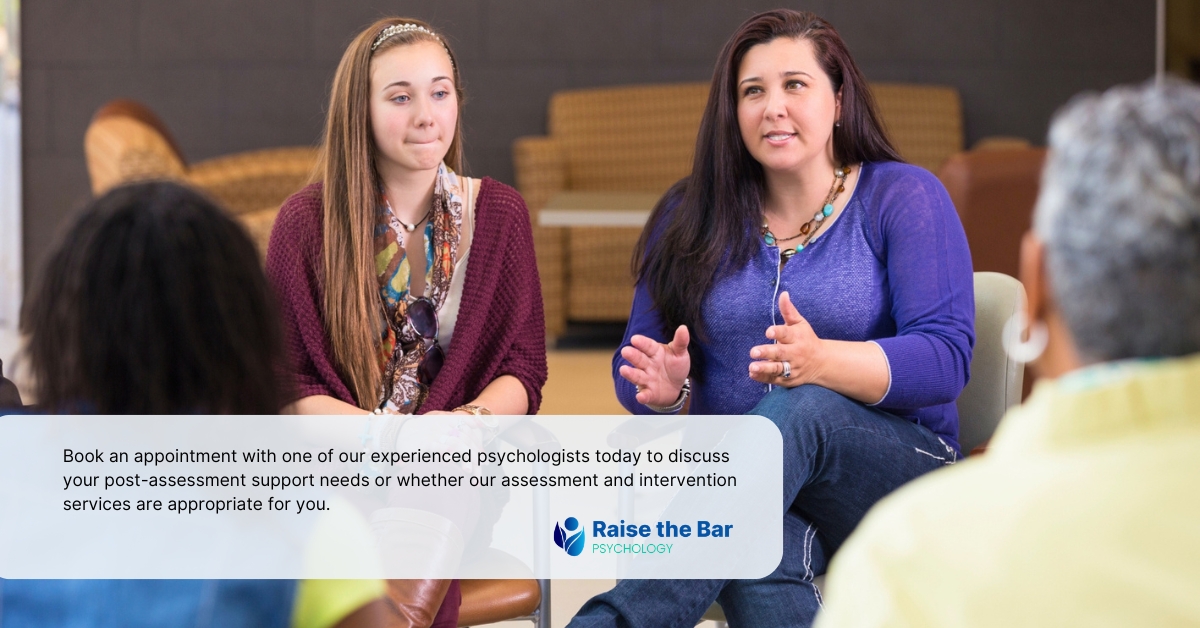
If your child has recently received a neurodevelopmental diagnosis, or if the feedback session left you with more questions than answers, post-assessment support at Raise the Bar Clinic is available as part of or separate from an assessment package.
Each of the signature post-assessment sessions is priced at $275 and runs for up to 50 minutes. Additional support includes parent consultations, school consultation sessions, Individual Education Plan reviews, and student profile development. When you book a neurodevelopmental assessment with Raise the Bar, you have access to evidence-based guidance and expert support beyond the assessment itself.
You do not have to take those next steps alone. To learn more or book a session, visit the Post-Assessment Support page or book a discovery call.